About
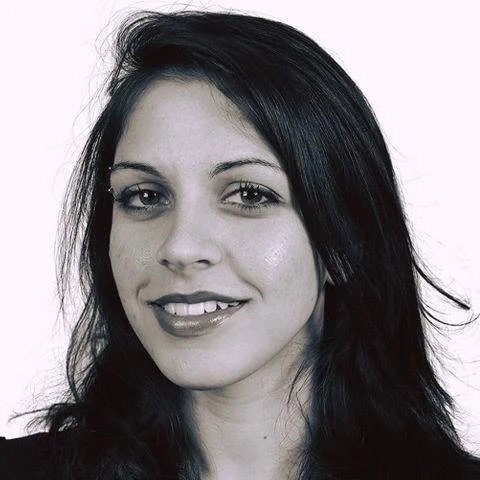
Nisha Balaram is an award-winning documentary filmmaker, director, and producer whose work spans independent film, broadcast, and documentary series. She is the director of Meals That Made Us, a CAAM-funded documentary series exploring how Asian Americans use food to shape identity, preserve heritage, and build community across the Bay Area, which premiered at CAAMFest 2026. Her producing credits include Voces: Latino Vote 2024, a PBS documentary produced in collaboration with PBS SoCal, ITVS, Latino Public Broadcasting, and the Corporation for Public Broadcasting, and Voices Rising: The Music of Wakanda Forever, a global documentary series from Proximity Media exploring the music and musicians behind Black Panther: Wakanda Forever. She is currently completing the festival run of her short film Flight Line.
Balaram is a graduate of UC Berkeley’s Graduate School of Journalism, where she received the Chauncey Bailey Fellowship, and a recipient of the North Star Fellowship through the Points North Institute and the Alfred Hopkins Award for Reporting in Latin America. Her work has been supported by organizations including the Center for Asian American Media and the National Geographic Society, and her reporting and documentary work has appeared across PBS, KALW, Mongabay, and other national and regional platforms. She is a member of Brown Girls Doc Mafia and the Asian American Journalists Association.
Before becoming a filmmaker, Balaram spent almost eight years working in public policy, with a focus on racial justice, police use of force, food systems, and land sovereignty. She has worked with advocacy networks and policy organizations including the Alliance for Boys and Men of Color and the Greenlining Institute, where she developed an understanding of how legislation, institutions, and public systems shape people's everyday lives. That policy background continues to inform her filmmaking: she brings a reporting and systems-level perspective to stories while centering the people living inside them. Her work is particularly interested in the intersection of culture, identity, power, and community—and in using documentary storytelling to make complex social issues tangible and human.